





.svg)



Data custody has become a hot topic across businesses in a number of different areas. The spotlight is very much on who owns certain pieces of data, who has access to that data, how it’s used, how and where it’s stored, and how permission to use it is given.
Payroll is no exception to this, especially in a climate of rising employee expectations within the workplace, and many workers taking a more proactive role in controlling their information.
But how is data custody changing, what do employees expect from their employers, and what does it mean from a payroll perspective? In this blog, we’ll take a closer look at the importance of data custody for payroll, and the role technology has to play in the months and years ahead.
Why has data custody become an issue?
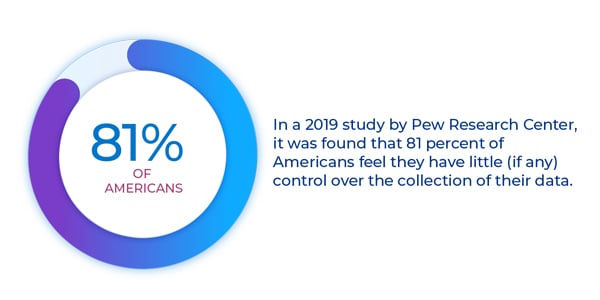
In the last few years, employees - and indeed the general public as a whole - have become much more aware of the amount of personal data that exists around them, and just how many people have access to it. In particular, they’re worried that controlling this access and use is out of their hands: according to the Pew Research Center, 81% of Americans feel they have little if any control over the collection of their data.
This issue is manifesting itself in people’s working lives just as much as it is in their personal lives. Employees want more control and transparency from their employers around their data, and while that is a perfectly reasonable expectation, many businesses are finding it difficult to make that happen. That’s because the amount of data, and the number of applications making use of that data, are both increasing all the time. This means keeping that data accurate, up-to-date and secure is becoming a bigger and bigger challenge.
Businesses are spending ever-increasing amounts of time and money looking after this data, when in reality it isn’t even theirs. As Linda Overton, Director of Shared Services at DXC Technology, said in a recent CloudPay podcast: “There is a little bit of a false sense of security that the employer is the primary source for the data. We as employers spend millions of hours ensuring that data is current and accurate, but it really, truly does belong to the employee.”
Out with the old, in with the new
All this means that a new model for data custody within businesses is essential. There is one fundamental change between how things used to work and how they will work in the future: data ownership.
Under what will increasingly be known as the ‘old’ model, data is ‘managed’ and retained by an employer. Whenever a person or system needs access to that data - whether internally within the business, or externally by a supplier or vendor - they can request and receive a unique copy of that data. While the intention is for that data to be as accurate and up-to-date as possible, the need for data replication means that it’s impossible to deliver accurate, real-time data 100% of the time.
The new model shifts the management and retention of data to each individual employee. The ‘consumers’ who want to access and use that data - employers, third parties and so on - have to ‘call in’ to do so, but they are never able to retain that data. They create their own data, which then becomes meaningful when combined with the employee’s digital persona or record stored in blockchain.
What does this new model mean from a payroll perspective?
Blockchain is the key to making this new data custody and ownership model work for employees and employers alike.
In the context of financial data that payroll would use, it works by creating one definitive version of data, stored in a decentralized ledger which can then be accessed by any relevant party. Nobody other than the employee can access any type of data until they are given express permission by the employee to do so.
For employees, this ensures they stay in total control of who accesses which elements of their data and for which purposes. It also keeps that data safely stored in one place, instead of multiple copies being created, spread across several different parties and then potentially falling into the wrong hands.
Employers benefit from this new arrangement, too. With only one version of the data available, employers and payroll practitioners can rely on it to be accurate and up-to-date, while the need to constantly maintain its accuracy and consistency across multiple sources is removed.

In summary
The new model of data ownership represents a subtle change, but a very important one nonetheless. At a time when employers are expected to be proactive in ensuring employees have control over their data, using the blockchain is a positive solution all-round to ensuring data transparency, accuracy and security. This can be especially useful when exploring new payroll approaches such as on-demand pay, where up-to-date access to sensitive data is critical.
CloudPay’s global payroll solution can help you make the most of blockchain-hosted employee data, and take your employee experiences to the next level. Explore how it maximizes the potential of that data here.
