







.svg)



Originally featured in The Sunday Times' Future of Payments 2021 report
A damaging timing misalignment between employees’ labour and when employers remunerate them is holding both sides back from achieving their potential. But new models of employee payment are quickly gaining adoption, empowering staff with flexible access to their wages.
 The way employers pay their employees – monthly, bimonthly or weekly – is preventing companies from unlocking a $1tn opportunity. That’s how much is accrued in employer payroll accounts on any given day in OECD countries, according to EY. Unlocking it means fixing a damaging, century-long timing misalignment between labour and pay that could also help companies win the battle for talent and improve the relationship with their workforce.
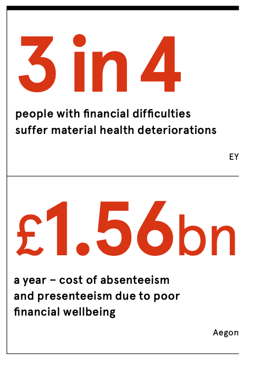
The main impact is on employee wellbeing. EY’s research finds three in four people with financial difficulties suffer material health deteriorations. A further 70% of UK and US individuals regularly experience financial stress.
But this outdated model of employee pay is also having a spiralling effect on businesses. One fifth of staff turnover is attributed to financial stress, not to mention how poor wellbeing manifests as distraction, absenteeism and poor performance. Aegon research estimated absenteeism and presenteeism due to poor financial wellbeing could be costing as much as £1.56bn a year.

Having witnessed millennials struggle to achieve the financial independence or viability to reach milestones like buying a home, those from Gen Z entering the workforce are determined to halt the trend. This is a crisis affecting every working age group, however, causing all generations to unite in demanding an alternative model of remuneration.
Employees in a better financial situation are nearly twice as present and engaged at work as those in a worsening financial position, according to a 2020 study by Willis Towers Watson. Post-pandemic, the days of caring about having table football or beer on tap in the physical office are fading. Today, employees seek out companies that prioritise wellbeing and offer flexibility.
Both concepts must extend beyond how and where they work to how and when they get paid. Facilitated by new technology and payment options, on-demand pay - also known as earned wage access - is the tangible solution.
Progressive employers are already deploying on-demand pay on a global scale. One company, a global premium life- style brand, has implemented CloudPay's earned wage access capabilities to allow employees across 12 countries to draw down their earned pay ahead of payday. This is provided as a benefit at no cost to staff, though system rules are in place to encourage the right behaviour.
In some countries, for instance, employees can withdraw earned wages a maximum of four times per month. In others, they can only withdraw up to half of their earned wages ahead of payday. In yet a third set of countries, more tenured employees can access a higher portion of their earned wages.
In all instances, flexibility, education and speed are paramount to the success of these initiatives. Employers are starting to embed financial education content in on-demand pay tools to educate employees on how to better manage their finances. This is crucial because a lack of financial literacy is as much a problem for staff wellbeing as the historic timing imbalance between labour and pay. It can cause employees to turn to suboptimal lending practices, such as credit card debt, that might fulfil the immediate need to pay an urgent bill but ultimately perpetuate financial stress and its subsequent implications.
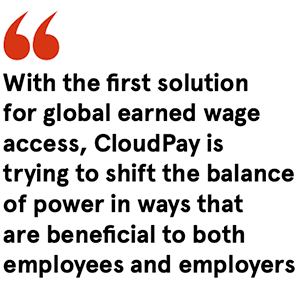 "With the first solution for global earned wage access, CloudPay is trying to shift the balance of power in ways that are beneficial to both employees and employers, as well as providing a viable way to eliminate a widespread financial crisis that has endured for far too long. On-demand pay tools enable employers to fix both the financial literacy challenges their employees face and the timing mis-alignment between labour and pay,” says Paul Bartlett, CEO of CloudPay.
“We think there’s a strategic and moral opportunity for companies to improve staff wellbeing, retention and brand loyalty in the process of addressing this crisis. And honestly, it's giving people what is already theirs.”
Earned wage access will eventually become as expected by employees as flexible working. Organisations that don’t offer it will likely disqualify themselves from the best talent, which simply won’t accept the burdens of a monthly pay cycle. Like flexible working, and unlike more traditional additions to employment pack- ages such as gym memberships and private healthcare, it doesn’t have to cost employees anything.

Crucially, the benefits not only affect employees but employers, too. Offering earned wage access enables employers to better attract and retain talent, improve employee engagement and enhance employee wellbeing, which has become increasingly important in recent years. Quite simply, employees who worry less about paying their bills will be more productive and mindful that their employer is actively supporting them in both their personal and professional lives.
As on-demand pay becomes the standard system of employee remuneration, it will transform the employment landscape and the traditional relationship between companies and workers. For employees, it changes their approach to credit, and to earning and using money.
Most importantly, it enhances their financial literacy and wellbeing, making them happier and more productive, engaged and, likely, loyal employees to organisations that recognise the value of a workforce that is empowered to withdraw earned pay when it makes the most sense for them.
To read this and the rest of the publication, download the full Sunday Times: Future of Payments report. Or visit our Earned Wage Access solution page to learn more about CloudPay NOW.
